LEARN. PRACTISE. MAKE PROGRESS.
Find your next course. Prepare for your next exam.
Follow a course one lesson at a time, explore ideas with interactive diagrams, then put your knowledge to work with exam questions.
Explore Paperlane
See it. Understand it. Put it into practice.
Biology · Year 7 · Cells
How does a plant stand up without a skeleton?
Step inside a lesson on plant cells. Explore the structures, connect each one to its job, and use that knowledge to explain how a plant works.
- Locate structures in an interactive cell diagram.
- Understand how the cell wall and vacuole support a plant.
- Apply the idea to a question that asks why.
Cells · Lesson 5
Plant cell structures and their functions
Select a structure to locate it and read its function. Positions, colours and relative sizes are schematic. Plant cells also have a cell wall, chloroplasts and a large permanent vacuole.
cell membrane: Controls which substances enter and leave.
Why do underground root hair cells have no chloroplasts?
Root hair cells absorb water and minerals underground, where there is little or no light. They are specialised for absorption rather than photosynthesis, so they do not need chloroplasts.
Courses
View allAtoms, elements and compounds
This unit explores the basic atomic model, the differences between atoms, elements, and compounds, and the varying physical and chemical properties of elements. It covers chemical symbols, formulae, SI units, and IUPAC nomenclature, emphasising their use in describing elements and compounds.
RestrictedHuman digestive system
This unit examines the human digestive system, including the roles of tissues, organs, enzymes, and beneficial bacteria. It also focuses on evaluating risks, interpreting data, identifying patterns, and suggesting improvements to enhance the reliability of investigations.
Restricted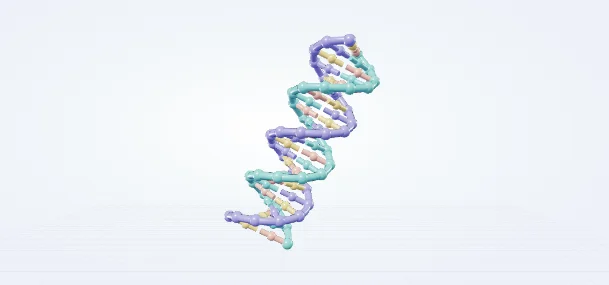
The code of life
Two DNA strands twist into a double helix. A pairs with T; C pairs with G.
Energy on the move
Electric and magnetic fields oscillate at right angles to each other and to the direction of travel.
Order, atom by atom
Sodium and chloride ions alternate in a repeating three-dimensional crystal lattice.